SOFIA - Inside the hanger

Flight training

(In our last report, Daniel Angerhausen, a postdoctoral fellow in the lab of Jon Morse, Rensselaer Polytechnic Institute professor of physics, was poised to fulfill a longtime dream and fly about NASA’s flying observatory, SOFIA. Alas, the path to science is often paved with setbacks and … well, we’ll let him tell you about it himself.)

Recently I wrote about my trip to California to make a long-cherished dream come true by flying aboard the Stratospheric Observatory for Infrared Astronomy (SOFIA), NASA’s Boeing 747-SP with equipped with a 2.5 meter-wide telescope. Today I have to report that it did not work out for me. And a tiny $12 electrical spare part bears the blame.

{ 0 comments }

Daniel Angerhausen with SOFIA

Daniel Angerhausen with SOFIA

(Later this week, Daniel Angerhausen, a postdoctoral fellow in the lab of Jon Morse, Rensselaer Polytechnic Institute professor of physics and associate vice president for research for physical sciences and engineering, will be flying aboard the airborne telescope SOFIA. Angerhausen, a native of Uerdingen, Germany [about 30 minutes from Cologne], sent us this excellent post about the flight and his research. Enjoy!)

My name is Daniel Angerhausen, I’m a postdoc in the Department of Physics, Applied Physics, and Astronomy at RPI, and on Thursday I will fulfill one of my biggest dreams: I will be on board the flying observatory SOFIA to observe a planet in a another solar system.

{ 0 comments }

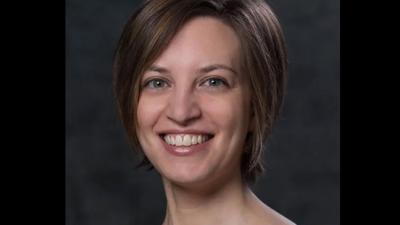
Emily DeLarme with a graph displaying light from the secondary transit of Kepler 2b

More than 1,000 light years from Earth, a giant gaseous planet is in a tight and fast orbit around a star larger than the Sun, and, between the two of them, there’s something funny going on. The star is known as HAT-P-7 or Kepler 2, the planet is Kepler 2b, and Rensselaer physics and astronomy student Emily DeLarme has the latest clue in the mystery.

DeLarme – whose research will be part of the April 24 Posters on the Hill exhibit on Capitol Hill, sponsored by the Council on Undergraduate Research - is studying data gathered by NASA’s Kepler space telescope. Kepler, launched in 2009 to search for Earth-size planets, gathers data on approximately 150,000 stars. Analysis of Kepler data has led to identification of 2,740 planetary candidates, and 115 confirmed planets.

{ 0 comments }

Stranger Visions

by Mary Martialay on April 11, 2013

A self portrait by artist Heather Dewey-Hagborg

This self portait of artist Heather Dewey Hagborg was created from genetic material. Photo credit: Dan Phiffer.

The emerging genre of bio-art explores new frontiers of life made possible through biotechnology—transgenic species, cells grown on artificial scaffolds, or formed into organs using 3-D printing—and our increasing ability to start, stop, and form life at will. Bio-artists often use techniques developed in the lab in their work, and there are several artists in the Department of Arts at Rensselaer, notably artist and Professor Kathy High, who have relied on the university’s well-established biotechnology research labs as a springboard for their work.

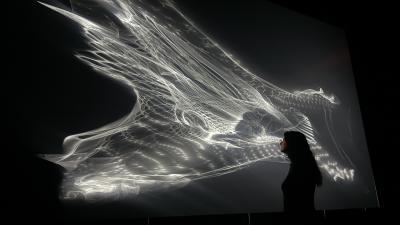
A recent example of that work, from artist and Rensselaer Ph.D. candidate Heather Dewey-Hagborg, has been getting a lot of attention. Most recently exhibited as “Stranger Visions,” the work uses DNA analysis and a 3-D printer to create sculpture “portraits” based on traces of DNA from shed hair, used cigarettes, and spent chewing gum that Dewey-Hagborg collects in public places.

{ 0 comments }

Michael Jensen is a professor in the Department of Mechanical, Aerospace, and Nuclear Engineering at Rensselaer. We ask him about his work:

Q: What problems are you trying to solve?

A: My research revolves around heat transfer, whether in large-scale heat exchangers, such as what might be found in a chemical process plant, or at the microscale, such as with electronics cooling in high performance computers. The goal is to try to understand what the governing processes are, and then to develop methods to predict the processes; this is essential for design, as well as for troubleshooting.

What is your favorite course to teach?

I most enjoy teaching undergraduate thermal and fluids courses. On nearly every topic I can relate the material to something in the students’ lives; either they have used it, seen it, or heard about it, so it is fun to ask them if they’ve thought about it. Tying the theory to a practical application they’re familiar with makes it more real to the students; it’s not just an abstract concept.

When you were an undergraduate student, what was your favorite course?

I confess that as an undergraduate, I didn’t really have a favorite course. Many courses interested me, but when I graduated I said I would never go back to school; I just wanted out.  

{ 0 comments }

CANstruction 2013 - We're Not in Cansas Anymore

(Rensselaer Architecture student Tyler Hopf wrote this post about a team of Rensselaer students who are putting their skills and talents to a good cause in the Albany round of the nationwide CANstruction fundraising event.)

My name is Tyler Hopf and I am the captain of the Rensselaer Polytechnic Institute CANstruction team.  We are the only student team competing in a regional design competition against other professional architecture and engineering firms. We are competing with one another through our designs, but in the end, all of our efforts go towards helping the hungry.

Each year we raise money to purchase canned food from Price Chopper and design something crazy to build with them.  After we build our CANstructure, it is exhibited in the New York State Museum for two weeks and then after it is taken down, all of the canned food is donated directly to the Food Pantries for the Capital Region.

{ 0 comments }

(In the wake of this morning’s headlines about a meteorite blast in Russia, the Institute’s own Laurie Leshin, dean of the School of Science and space science rock star, wrote this  post for The Approach. Enjoy!)

This morning people in Russia got a loud reminder that Earth isn’t really a blue marble floating peacefully in space. A meteor, about the size of a bus, slammed into our atmosphere going over 30,000 miles per hour. This caused very loud sonic booms which damaged buildings and injured about 1,000 people near the city of Chelyabinsk. Luckily, there weren’t any deaths, and damaged buildings can be repaired. But this cosmic intruder reminds us that in fact we live in solar system filled with space debris—Earth collects 40,000 tons of it EVERY YEAR. Most of it looks the above picture.

The image is of a small dust particle (about 10 microns across, or one-tenth the width of a human hair) that is slowed down in the upper atmosphere and harmlessly floats to Earth. Walk to your car, and you’ll step on lots of them…

But there are bigger things out there, too. We need to find them and then figure out how to deflect them or change their course, before a large one hits Earth. Most people have seen the really entertaining movie Armageddon, starring Bruce Willis as a driller who saves the earth from an asteroid “the size of Texas.” Well, the truth is that it doesn’t have to be the size of Texas to be a global killer. (In fact, the largest known asteroid is only about one-third the size of Texas…Hollywood!) The asteroid that killed the dinosaurs was, in fact, only about the size of our own city of Troy. And there are lots of those. Nervous yet? Me too. How about putting some of our science and engineering talents to work figuring out how to deflect one? In the meantime, remember, we live on a space rock. And sometimes, we interact with other space rocks.

{ 0 comments }

Whenever anyone remarks at the wonder of a Ferris wheel, they are indeed invoking the genius of a Rensselaer engineer. George W.G. Ferris is among the most notable alumni of our university, and there’s certainly an argument to be made that his is the most widely-recognized name of all the Institute’s graduates.

Today, Google paid homage to Ferris’ 154th birthday with a Google Doodle, which you can see above (and archived here). The Doodle is a mash-up of a Ferris Wheel scene with plenty of St. Valentine’s Day imagery.

Here is the citation about Ferris (Class of 1881) from the Rensselaer Alumni Hall of Fame:

Ferris began his career in the railroad industry and pursued an interest in bridge building.

Foreseeing an increase in the use of structural steel, he founded G.W.G. Ferris & Co. in Pittsburgh, a firm that tested and inspected metals for railroads and bridge builders.

When the chief of construction for the World’s Columbian Exposition challenged America’s civil engineers to produce something to rival the Eiffel Tower of the Paris Exposition, Ferris’s imagination was fired.

He conceived the Ferris Wheel, which rose 250 feet and carried 36 cars, each with a capacity for 40 passengers, revolving under perfect control, and stable against the strongest winds from Lake Michigan.

The daring and accuracy of its design and the precision of the machine work of its construction won the admiration of engineers and the joy and wonder of generations.

{ 0 comments }

In The Lead

by Mary Martialay on February 13, 2013

Zineth, developed by Rensselaer student game design group Rust Ltd.

Zineth, developed by Rensselaer students, and an winner at the 2013 Independent Games Festival Student Showcase

With a mix of electronic arts, computer science, and one of the best game design programs in the country, Rensselaer students produce a regular fount of polished, professional video games, and we hear regularly from students and graduates of the Games and Simulation Arts and Sciences (GSAS) program who’ve made good in the game design world. (To see some of those games in action, save the date for this year’s GameFest, April 26-27 at the Curtis R. Priem Experimental Media and Performing Arts Center.) Ben Chang, co-director of the GSAS program, reached out to me recently with some of the latest accolades. Here’s the low-down:

{ 0 comments }

Watson at Rensselaer

by Michael Mullaney on February 5, 2013

Campus is still abuzz from last week’s announcement that IBM will give a version of its Watson system to Rensselaer. The computer rose to fame in early 2011 after if defeated the two all-time human champions of the quiz show Jeopardy!. The Internet is also abuzz with the news, and our own Jim Hendler is at the very center of the media merriment.

Professor Hendler, who is the head of our Department of Computer Science and one of the lead researchers on the Watson project at Rensselaer, recently did a Q&A with the Washington Post about the future of Watson at Rensselaer. A snippet is below, and you can read the entire story here.

WashPo: What will be the first steps in introducing Watson to the RPI team?

Hendler: Programming Watson requires understanding its particular flow of control in Question-Answering. For those people on campus who have not already been involved in the project, we will have several faculty, staff and students take a 2-day training course led by the IBM team, and then those people, in turn, will be able to teach others as well as jump-starting our work.

What “classes” will Watson be taking? Additionally, will this be, perhaps, the opportunity to create a “curriculum,” if you will, for other systems when it comes to processing the large volume of unstructured data out there?

We will be looking at a number of different projects that explore what Watson can do.

{ 0 comments }